

Australia’s only Naturopathically Formulated and Certified Organic Skincare
Australia’s only Naturopathically Formulated and Certified Organic Skincare

We’ve just drawn the January winner for our monthly competition that asks entrants to tell us why using organic skincare is important to you (or why you want to make the change to organic skincare).
I love reading through these entries each month as we get some inspiring (and hilarious) answers. Here are a few of my favourites that might encourage you to make the switch (if you haven’t already done so):
“Because I don’t have to worry when my 1 year old learns how to open my jar of face cream and eats the entire tub.”
“Because they are made with superior ingredients. It’s like cooking, better ingredients mean better results. Those with sensitive skin like myself can especially benefit from organic beauty products that contain high quality ingredients.”
“Harmful chemicals in my products make me see RED! (Not in anger but in allergens)”
“There’s so much about my health and wellbeing that I can’t control, so I love the idea of taking charge and making a change in an area where I’ll see and feel immediate results.”
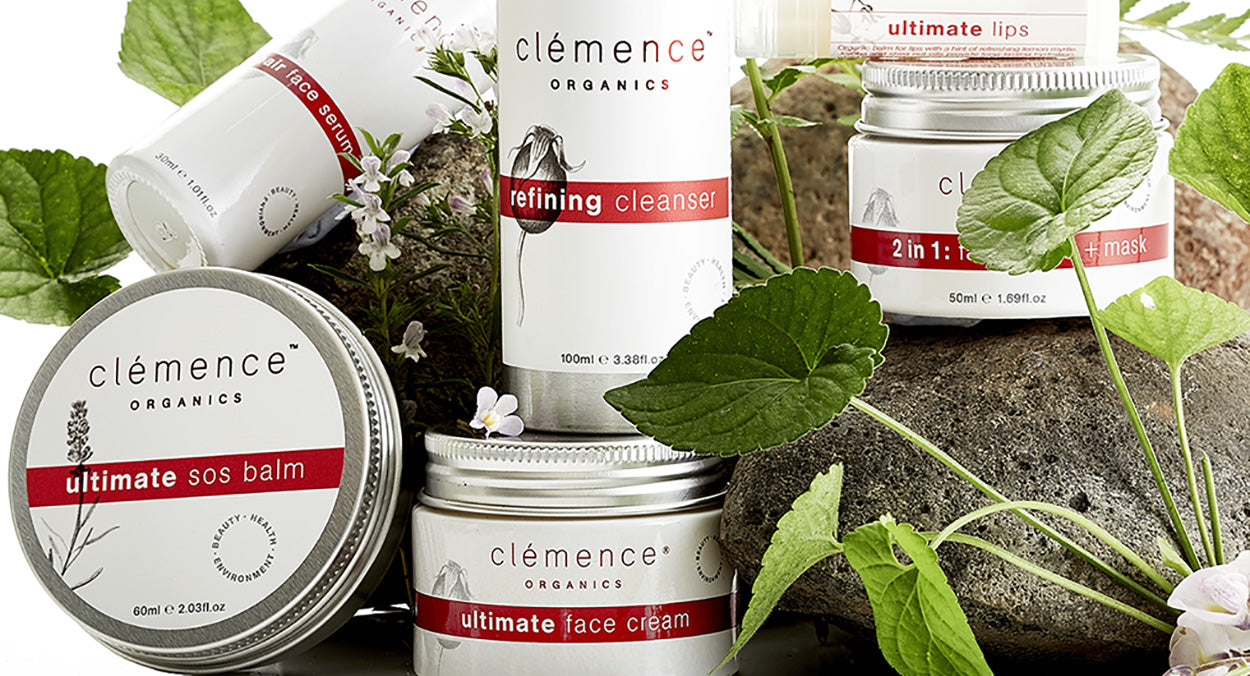
“It’s my dog’s favourite! She especially loves licking the ultimate SOS balm. I think it makes her coat shiny and has improved her health with all those organic ingredients.”
“We don’t smoke so we don’t hurt our lungs, we avoid drinking so we don’t hurt our liver, but we all use non-organic skincare and hurt our skin every day! If you can’t eat it, why would you let it inside your body?”
“Roses are red, violets are blue, organic skincare is the bomb for you.”
“I need to change my complete skincare products to organic because I’m tired of supporting all these international companies that use harmful substances in their products and promote them as beauty. These chemicals can have detrimental effects on mine and my family’s health. I also want to set an example for my daughter so that I can instill healthier habits.”
Want to share your reasons for making the switch to organic skincare? We'd love to hear from you!

I don’t normally make New Year’s resolutions but this year I decided that I wanted to push myself out of my comfort zone. I took on an ‘if not now, when?’ attitude which has so far seen me riding horses on the beach and having surfing lessons with my nieces. I really want to make the most of my time and so I decided resolutions were in.
The first resolution I made was to learn guitar. This is definitely out of my comfort zone as I last tried learning guitar as a child (my father was a professional player) and after several lessons I convinced myself I couldn’t play. I’ve carried that mindset for years but on New Year’s Eve, when sitting around listening to friends play guitar, I decided it was time to give that mindset the heave ho.
The second resolution I made was to keep a diary. I haven’t done this for years as I convinced myself it was better to focus on the here and now, rather than reflect too much on the past. But when the kids ask me questions about my Dad that I can’t answer, I can’t help but wish that he had kept a diary that I could refer to. I want my kids to have the facts if they want them.
The third resolution I made was to improve my health wherever possible. I’m so conscious of the fact that I’ve lost my sister and father to cancer, and I want to be certain that I’m doing everything I can do reduce my risk factors. I just don’t want to live my life in fear. And so I started researching longevity which led me to the book ‘The Blue Zones’ by Dan Buettner. This book delves into the communities around the world that live the longest and shares the goods on what gives them the extra years. So far it’s a fascinating read and, as I learn more, I’ll definitely be sharing it with you.
I also made a business resolution to get clear on my audience and make sure I was reaching all the people that need Clémence Organics in their lives. The truth of the matter is you can’t meet everyone’s needs and you can’t make everyone happy. So whose problems am I trying to solve?
You see I originally made this skincare to solve a problem. It was a problem that was first and foremostly mine. A few years ago I say would that my skin sucked. No matter how many products I wasted money on, nothing really worked for me. I also hated choosing products that weren’t natural but somehow I thought they might be my only option with my skin issues. How wrong I was! Turns out it was all about choosing the right ingredients, in the right application method, to fix my skin. Since then I’ve changed copious other clients’ skin issues and, as our reach grows, I need to make sure I continue to reach the right audience.
So is Clémence Organics for you? Let’s take the test!
• Do you have skin issues that have seen you waste money on countless skincare products over the years?
• Do you like to see results from your skincare?
• Do you care about your health and the health of the environment?
• Do you like supporting a brand that is 100% Australian made and owned?
• Do you like a brand that loves you back with free shipping, rewards points and special offers?
If you answered no to any of those questions then please unsubscribe from this newsletter now. Clémence Organics is not for you. If, however, you said yes then you my friend are in the right room.
I’m only just over 2 years into this business and so I’m still very much learning. I treasure my customers and all that they share with me. If you have any feedback, good or bad, that you feel would help improve Clémence Organics, then I’d love to hear from you.
I truly hope that 2019 is a bountiful year for you and that together we can make it our healthiest yet. What’s your New Year’s resolution?


Living in the NSW Blue Mountains, I'm surrounded by people who love the outdoors, and nearly everyone you meet is a rock climber. But there are rock climbers and there are rock climbers, and Amanda Watts has got to be the most impressive female climber I've ever met, representing Australia in World Cups and competing at an elite level for over 20 years. Not only does she excel at this sport but she is also a nutritionist and dietitian, helping other sportspeople reach optimum results in their chosen field.
In this interview I asked Amanda about her climbing career, how the right kind of nutrition can change lives and what beauty means to her.
Q. Could you tell us how you got into rock climbing?
I was 17 and in my first year of Uni studying graphic design. A male friend of mine started going to the indoor climbing gym and had been talking about it non stop. He reluctantly took me with him, telling me I wouldn’t like it but I’ve never been one to take notice of boys in those situations. I absolutely loved it as it turned out and was hooked from day one and think I climbed nearly every day for the first 2 years of my climbing life. I moved to the Blue Mountains from WA for climbing when I was 20 and haven’t stopped climbing since.
Q. You run a thriving nutrition and dietetics practice in the Blue Mountains. Could you tell us about the importance of diet when it comes to living your best life?
The food we eat has an impact on both our physical and emotional states, so understanding food and eating well are essential. I think most of us can relate to that flat, spacey feeling of a sugar low or the button popping, lie on the floor and not move feeling induced by over eating. If you just look at the impact of those two examples on our mood and energy levels you can see the impact of diet. Then to expand things out, if you look at what we are learning about the gut microbiome and how we can impact our immune systems and our brains with the bacteria colonies in our digestive tract, diet is one of the first stops in living your best life. Food impacts and offers so much and can also be such a cause of heart ache and stress. I love working with people to make food and eating a positive and empowering thing for them to do, so they get to set up their best life.
Q. And how does nutrition and dietetics feed into rock climbing?
It underpins everything. At every level of climbing food has an impact. Whether you are climbing at an elite level or you just have a couple of climbing sessions a week for fun. What you eat determines how fast you recover, how much you gain or lose and how hard you can go in your sessions. It impacts your ability to concentrate, your immune function, energy levels, mood and long term health. It is very cool seeing how much impact a few simple diet changes can have on performance.
Q. I imagine your clients come to you for a variety of reasons, but all of them require some level of change. Stepping someone through dietary and lifestyle choices is one thing. How do you approach a change in their mental attitude?
Facilitating change for people is such a challenge and an art and everyone needs something different. I am so passionate about helping, educating and empowering people. I just want everyone I work with to have the best life they can. I think as humans we naturally like the comfort of the familiar, so to make big lifestyle and diet change can be pretty uncomfortable. My job is to make that feel easier, more comfortable and something exciting and empowering. When you can anchor people in to their big dream for their life and for themselves and help them find the steps toward that big dream, change is so much easier.
Q. You have a pretty unique experience of beauty with the different roles you play. I imagine in your role as a dietitian you work with people who struggle to feel beautiful and you work with them to find that beauty in themselves. And then there’s your role as an elite athlete in a predominantly male dominated sport and as a mother to your 5 year old daughter. When you bring these things together, what does beauty mean to you?
Beauty for me is authenticity and kindness. I think when you understand yourself and what lights you up in the world, when you are clear about what your core values are and you are living your life as aligned to these things as you can, that is where you find beauty. Authenticity is the X factor that people seek and it is something that everyone has if they choose to embrace who they truly are. It is so, so important to me that my daughter learns that beauty is about all of her, not just the way she looks. That the way she thinks, feels, expresses herself and treats people are so important and have such an impact on the world. For me someone like Turia Pitt is the poster girl for true beauty. The scars she has mean that her classic beauty has changed, but she has found her life purpose and is trail blazing with it, she has worked hard to be comfortable in her own skin and her beauty just shines through. It is incredibly inspiring.
Q. You’ve begun embracing natural and organic beauty in your skincare regime. What made you want to transition to this type of skincare?
I have noticed organic products for a while but I have always had such sensitive and reactive skin and my experience of trying anything new had been terrible. Red, stinging skin and difficulty working out what products were best or safest to try. So historically, it was always about finding a product I didn't react to and sicking to it, rather than seeking out an organic product. But the world is changing and I have a daughter who looks up to me to learn what is good for her. Our oceans are full of plastic, we are running out of room for all the stuff we have bought, that we don’t need and I wanted to step up and be more responsible for how I use our planet. The Clémence organics message and values resonated with me. The fact that its a local (Australian) owned and operated brand and the simplicity of the range made me take the leap. You answered all my questions and helped guide me through the transition to Clémence products and they work for my skin. So much so that my partner Tom is now also using them.
Q. What are some of your favourite beauty products and why?
In the Clémence organics range its the Refining Cleanser, the Tone + Hydrate Spritz and the Ultimate Face Cream. The Cleanser leaves my skin feeling clean but not stripped and dry (which was a welcome surprise), the Tone + Hydrate Spritz gives me a day spa feel when I get out of the shower and its so easy to use that I actually finally use a toner. The Cream just lasts so well - I wake up with my skin feeling moisturised and soft. When you spend days out in the elements climbing, it's excellent to find a product that actually helps counteract that. Outside of the Clémence range, I love a good mascara. It is the one bit of makeup that makes me feel good when I am living in active wear and spending most days covered in climbing chalk and sweat.
Q. Top beauty tip?
Love yourself as well as you can. To learn more about Amanda or to book an appointment, visit her website: http://nutritioncollective.com.au/thrive/

Summer is finally here, hooray! This means warm days and nights, lots of catch ups and plenty of beach time. It also means your skin is exposed to more sun and heat than ever, and can be left a little worse for wear if not looked after.
Here are my 5 favourite products for keeping skin healthy and glowing this silly season.
1. Glow like crazy
I love summer for the chance to wear my beloved t-shirts and summer dresses, and nothing gives me more confidence than having glowing skin on my arms and legs. I’m not a fan of tanning lotions and would rather simply accentuate the health of my skin with natural oils. My favourite way to do this is with our Ultimate Baby Oil which contains 100% organic ingredients. Calendula gives skin a touch of natural colour, and camellia oil provides a natural glow and long-lasting hydration. It also smells absolutely divine! This product is for babes of all ages.
2. Spritz it up
Our latest product, Ultimate Biome Spritz, is perfect for keeping the skin on your face healthy this summer. Vitamin C and green tea extract protect skin against free radical damage caused by the sun (and excessive Christmas spirit!). Probiotics help strengthen the skin’s protective barrier against pollutants and rose hydrosol reduces redness. I keep a Spritz on my desk and in my handbag so that I have no excuses.
3. Soothe with our SOS Balm
Occasionally I do get a little too much sun and it’s the Ultimate SOS Balm I reach for. It calms any burns and helps to repair damage straight away. Its intense hydration means that skin is less likely to blister and peel when sun is most definitely maxed out.
4. Give lip service
Our Ultimate Lips is so named for good reason. Its ultra-hydrating formula means that lips stay moist all day long and protected against cracks and cold sores. And if you’re after a touch of colour, you can’t go past our Rose Tinted Lips. No lumps or feathering, just pure natural colour. Perfect for those summer evening catch ups.
5. Repair skin at night
I LOVE applying our Repair Face Serum of an evening because its anti-inflammatory ingredients immediately soothe any inflammation I’ve got going on and keeps my pigmentation in check. It also provides the prefect base for make-up, and can be blended with your foundation for a lighter coverage.
Don’t forget to keep skin hydrated with plenty of water, and take advantage of the glorious summer fruits and veg on offer that will help skin glow from within.
Have a fabulous summer.

Simple dietary recommendations that can make a huge difference to how your skin ages. Foods that boost collagen levels, scavenge free radicals and calm inflammation.
Our skincare plays an important role in how our skin ages but did you know that your diet is just as important? The head honcho responsible for keeping skin plump and looking youthful is collagen. Our bodies make it for us but this starts to decline with age and with a poor diet. Here is the low down on collagen and my top tips for boosting your collagen levels naturally.
Collagen is a protein found throughout the human body and is naturally produced by all mammals and fish. This means that if I had to name the top 5 collagen rich foods, I would be naming parts of animals or meat-based dishes which are rich in collagen – tripe, bone broth, pigs trotters, animal skin (e.g. chicken skin, fish skin) etc. (note: actual collagen content varies dramatically according to age and size of the animal).
Collagen is a large protein made up of several amino acids (Glycine, Proline, Hydroxyproline and Arginine). So when we eat collagen, our body breaks it down into the individual amino acids and utilises those amino acids as it sees fit. So yes we can absorb collagen from food, but whether our body utilises it to boost the collagen levels in our skin is a complete unknown.
Yes. The amino acids required to form collagen can also be found in a vegetarian diet, in particular beans, nuts, seeds and some vegetables.
Collagen also requires several key nutrients to assist in its formation, in particular vitamin C. In fact vitamin C deficiency (otherwise known as scurvy) is identifiable by the fact that collagen-rich tissues start to break down (skin, blood vessels, bones) and wounds are especially slow-healing (our body needs collagen to heal wounds). Vitamin C rich foods include citrus, berries, capsicum, broccoli and kale. Zinc is also an important co-factor in collagen production and can be found in meat, poultry, seafood, legumes, nuts and wholegrains.
Vitamin C absorption can be boosted with the addition of bioflavonoids (natural plant pigments and antioxidants), naturally occurring in most vitamin c rich foods including citrus and berries.
Sleep more + reduce stress + exercise. When we sleep our bodies go into repair mode, part of which involves making collagen. If you’re not getting enough sleep then you are making less collagen, so try to get around 8 hours every night. Stress can also affect your skin’s collagen production. The key stress hormone, cortisol, has an inflammatory effect which can affect the skin’s ability to produce collagen. Increased cortisol levels also lead to a decrease in the blood and nutrients sent to our skin, leading to dryness and a loss of lustre in the skin. To reduce stress, use daily stress management practices e.g. yoga, meditation, and breathing exercises. Exercise has also been shown to boost collagen levels, so try to get around 30 minutes of exercise in most days.
Choose skincare products which support collagen levels and stimulate collagen production. Hyaluronic acid supports collagen levels by keeping it hydrated. Products which contain hyaluronic acid include our Ultimate Biome Spritz, Ultimate Face Cream and 2 in 1 Face Scrub + Mask. Just as vitamin C taken internally stimulates collagen production, so can it when applied externally. Vitamin C can be found in our Repair Face Serum and Ultimate Biome Spritz.
As always, I’m here to help so please feel free to reach out if you have any queries.
I hope you find it helpful.

Our hormones are hugely powerful chemicals that surge through our system constantly. They all have different jobs and some dominate at certain times in our lives. But how do they affect our skin?
Over 3 weeks I’ll be taking a look at different life stages, what hormones are most active at these times, how they affect our skin and what skin issues thrive in these conditions.
Although these two stages of life can be far removed from one another, they both herald a time when hormones are significantly changed from the norm.
PREGNANCY
This wondrous time in many women’s lives can lead to a glorious glow or skin from hell. Our bodies react differently and if you had a predisposition to a certain skin issue, this I the time it will show its ugly face! Here are a few of the common skin conditions that present themselves in pregnancy:
Acne
The reason some women get a pregnant ‘glow’ is the same reason some women get the worst acne of their lives. Increased androgen levels stimulate skin sebum production, leading to oily skin and acne.
Recommendations: Whilst you have to let your hormones do their thang during this time, you can help keep sebum production under control with a healthy diet and the right skincare. Diet should include low GI foods, reduced milk solids (milk and ice cream) and anti-inflammatory foods rich in omega 3 and omega 6 fatty acids (salmon, sardines, walnuts, chia seeds, flaxseeds, pumpkin seeds). Skincare should be anti-inflammatory, naturally antibacterial and non-comedogenic (won’t block pores). See Acne for product recommendations.
Stretch Marks
Pregnancy also means a time of physical change for the body, and where there is growth, there is potential for stretch marks, most commonly breasts, tummy and thighs.
Recommendations: Prevention is definitely better than a cure. Where you anticipate growth, apply a treatment that will reduce the occurrence of stretch marks. I highly recommend our Ultimate SOS Balm which can help prevent and also reduce existing stretch marks.
Hyperpigmentation
The hormone that causes our skin to tan and helps create our freckles and moles, melanin, also picks up during pregnancy. Whilst it’s barely noticeable for most women, some get what’s called chloasma or ‘the mask of pregnancy’, which is when areas of dark colouration appear on the face.
Recommendations: Thankfully in most cases chloasma fades after pregnancy but it is particularly important to wear sunscreen during this time to reduce any further melanin production.
MENOPAUSE
This significant time in our lives heralds the end of our fertile days and our menstrual cycle. Hormone levels fall, particularly oestrogen and progesterone, and our body undergoes a whole raft of changes. Skin is not left out of this upheaval.
The most significant change caused by reduced hormone levels in menopause is a decrease in collagen production. This affects both elasticity and skin thickness. Vitamin D is also harder to produce which has a flow-on effect to the skin, influencing both immunity and skin repair/ageing. Dryness also comes as a result of the decrease in oestrogen and progesterone. Talk about hitting skin for 6!
To support the skin during this time, the best approach is through a combination of internal and external recommendations.
Internal recommendations:
• Collagen support – add foods and nutrients to your diet which support collagen production including protein, vitamin C, and zinc (keep your eyes peeled for next week’s blog post which will be all about collagen!).
• Vitamin D – increase vitamin D rich foods (oily fish, eggs, nuts and seeds) and consider adding a supplement as absorption is reduced in menopause.
• Dry skin – increase omega 3 and omega 6 rich foods (salmon, sardines, walnuts, chia seeds, flaxseeds, pumpkin seeds) and ensure you are drinking 1-2L of water daily.
External recommendations:
• Collagen support – choose skincare products which contain vitamin C and hyaluronic acid (see Ageing + Mature Skin for product recommendations).
• Vitamin D – get a little sun on your bod each day (not during peak UV times). 10-15 minutes is all it takes to boost vitamin D levels.
• Dry skin – choose skincare products which are rich in natural oils and butters, and contain hyaluronic acid to hold water in the skin (see Ageing + Mature Skin for product recommendations).
As always, I’m here to help so please feel free to reach out if you have any queries.
I hope you find it helpful.

Our hormones are hugely powerful chemicals that surge through our system constantly. They all have different jobs and some dominate at certain times in our lives. But how do they affect our skin?
Over 3 weeks I’ll be taking a look at different life stages, what hormones are most active at these times, how they affect our skin and what skin issues thrive in these conditions.
After navigating our way through puberty (see Part 1 Puberty & Acne), we end up as young adults and our sex hormones start to balance out. Sometimes, however, they get out of whack for one reason or another and this can affect menstruation and the female reproductive system in general. When hormones are unbalanced, it has a flow on effect to other areas of the body. In this blog post we’re delving into the menstrual cycle, common female reproductive disorders and how they affect our skin.
The Menstrual Cycle
Our hormones fluctuate throughout the menstrual cycle, but it is just before or when we first get our period when acne tends to flare up. Why is this? You would think that it’s because our androgen levels are at their peak (increased androgen production leads to increased sebum production) but this peaks mid-cycle. Whilst it’s not clear what the exact correlation is, it’s thought that due to the gradual rise of hormones over the course of the month, sebum production is increased, which means that by the end of your cycle your pores are overworked and more likely to become blocked. Add an accumulation of dead skin cells and some bacteria to the mix, and you get an acne breakout.
You may also find yourself reaching for chocolate right before you get your period due to a decrease in insulin sensitivity at this time of month. Cave in to your cravings and any high GI or dairy foods will cause a spike in insulin levels which raises androgen levels, exacerbates sebum production and leads to more spots. (It’s really not fair is it?!)
And this is just the normal menstrual cycle. What happens when it’s not ‘normal’?
PCOS (Polycsystic ovarian syndrome)
PCOS is characterised by irregular periods, excessive androgen production and/or polycyctic ovaries. High insulin levels are also common in PCOS. Because of these factors, women with PCOS are more likely to suffer from acne, as well as unwanted hair growth known as hirsutism.
Endomentriosis
A diagnosis of Endometriosis is given when there is abnormal growth of endometrial tissue in areas outside the uterus. This can be caused by excessive oestrogen production, decreased clearance of oestrogen from the body and/or exposure to environmental toxins which mimic oestrogen. Endometriosis is also linked to chronic inflammation which has a flow on effect to the immune system. Common skin disorders that occur in endometriosis include rosacea, psoriasis and eczema.
Recommendations
To reduce premenstrual flare-ups I would recommend the following:
To reduce PCOS related acne, I would recommend the following:
To reduce Endometriosis related inflammatory skin conditions, I would recommend the following:
For more information on recommended products according to your skin condition, visit Skin Protocols in our Naturopathic Hub or Shop by Skin Condition (which sits in the top bar of the website).
As always, I’m here to help so please feel free to reach out if you have any queries.
I hope you find it helpful.

Our hormones are hugely powerful chemicals that surge through our system constantly. They all have different jobs and some dominate at certain times in our lives. But how do they affect our skin?
Over the next 3 weeks I’ll be taking a look at different life stages, what hormones are most active at these times, how they affect our skin and what skin issues thrive in these conditions.
(Yes that is me as a teenager!)
Our hormones gradually increase as we grow from infancy, through childhood. Once we hit puberty, which can occur any time after 10, our hormones take a big leap in production, particularly our growth hormones and sex hormones, which includes both oestrogen and androgens. Whilst oestrogen does play a role in keeping skin healthy, it’s the androgens that have a direct affect on the amount of sebum produced by our skin. An increase in androgen production can lead to excessive sebum production, known as seborrhoea, a common cause of acne. But it’s not just the androgens that cause acne. The makeup of our sebum plays a role here too.
What’s in our sebum?
This amazing lubricant, which acts to protect our skin, is made up of a mix of oils including essential fatty acids and cholesterol. Given the right balance, sebum transports antioxidants around our skin, provides anti-inflammatory benefits, and has a natural antibacterial quality which assists in the wound healing process.
The composition of it is affected by our diet, particularly the fatty acid component. Studies have shown that low levels of linoleic acid, an omega 6 fatty acid, have been found in people with acne. This information is particularly crucial given that linoleic acid cannot be made by our bodies and only obtained via our diet.
Diet, Hormones & Acne
Dietary choices can play a role in influencing our hormones and our skin in other ways. Dairy foods (particularly milk) and high GI foods (e.g. white bread, rice) have an effect on our insulin levels (particularly IGF-1) which further stimulates androgen production. Teenage years are often a time when food intake is mixed and haphazard, and so it doesn’t help that when the skin is most susceptible to dietary influences, diet is often at its least nutritious.
Stress
Puberty and teenage years are often very stressful times. Unfortunately this also affects our hormones and therefore our skin. The key stress hormone, cortisol, plays a role in our skin’s health in 2 ways. Firstly, it has a direct effect on sebum levels, increasing production when cortisol levels rise. Secondly, cortisol has a dampening effect on the immune system, which means that infections are more likely to take hold when you’re stressed.
Recommendations
Whilst hormones will be hormones, there are things you can do to minimise the impact on hormone fluctuations during puberty, and therefore minimise acne occurrence.
For further recommendations on acne, particularly adult acne, please refer to blog post ‘How Your Hormones Affect Your Skin’s Health – Part 2 The Menstrual Cycle & Hormone Irregularities‘.
As always, I’m here to help so please feel free to reach out if you have any queries.
I hope you find it helpful.

Since exhibiting at the Beauty Expo in Sydney a few weeks’ ago, I’ve been approached by many beauty salons using modern skin treatments (e.g. microdermabrasion, laser) wondering whether our products are suitable for simultaneous use. They most certainly are! In fact in most situations they will only improve on treatment results.
Whilst I have not partaken in these treatments myself (yet), I spent time talking to existing salon clients, as well as customers, family and friends, to hear their experiences and which products they found worked best with which treatment.
Here is a break-down on the 4 most common at-home and salon treatments going around (from least invasive to most) and which Clémence Organics products to combine for best effect.
What is it?
These are the rollers you’re seeing ALL over the internet at the moment. Generally made from either polished jade or quartz, they’re comprised of a broad crystal at one end (for large areas like your cheeks and forehead) and a small round crystal at the other (for tighter spots like under the nose and near the eyes).
What does it do?
By gently applying pressure, they can assist in draining fluid from the skin and increasing circulation. This can lead to improved skin tone, reduced puffiness and a boost in collagen production.
Which Clémence Organics products should I be using with this?
We highly recommend applying the Repair Face Serum before you start rolling. This will allow the roller to glide effortlessly across your skin, and the roller will increase the absorption and impact of the serum on the skin. Match made in heaven!
What is it?
These are the spiky version of crystal rollers! Basically, it’s a wand with a small head covered in tiny needles which you roll over your face.
What does it do?
The needles on the roller create small holes in your skin which allow skin care products quicker access into the deeper layers of your skin, and also stimulate skin renewal. This can benefit dry skin and anyone wanting to improve their complexion.
Which Clémence Organics products should I be using with this?
Dermal rolling should be done on clean, dry skin and so we would recommend first cleansing with our Refining Cleanser. After treatment, apply the Tone + Hydrate Spritz to calm any redness and follow with either Repair Face Serum or Ultimate Face Cream.
What is it?
This is basically a serious buff and polish for your skin. Although there are hundreds of different machines on the market, generally a small wand glides across your skin, exfoliating it with a type of crystal salt, and vacuuming up dead skin cells at the same time.
What does it do?
It’s serious exfoliation! Although multiple sessions are generally recommended to see results, microdermabrasion can help budge acne scars, pigmentation and fine lines.
Which Clémence Organics products should I be using with this?
The Clémence range is perfect for reducing inflammation post-treatment, and so we would recommend following with the Tone + Hydrate Spritz, Repair Face Serum and Ultimate Face Cream.
What is it?
Laser treatment involves using pulsating beams of light, set to different wavelengths, to address specific skin concerns. Like dermabrasion, there are hundreds of types of laser machines, including ablative (they remove the outer layer of skin) and non-ablative (do not remove skin).
What does it do?
Lasers can address anything from hyperpigmentation to tattoo removal. By varying the wavelength of the light, and the pulse duration, lasers ‘vaporise’ anything in their path.
Which Clémence Organics products should I be using with this?
Laser can cause some serious inflammation post-treatment and so we recommend applying the Tone + Hydrate Spritz to immediately cool and calm the skin. This should be followed by the Repair Face Serum and Ultimate Face Cream. Our Refining Cleanser will gently cleanse the skin in the days following, without stripping it of its natural oils and causing any further inflammation.
As always, I’m here to help so please feel free to reach out if you have any queries.
I hope you find it helpful.

When I was mulling over topics to discuss in this week’s blog, I got to thinking about scars. I started pondering the different scars that I have had to deal with in my 37 years.
I developed my first keloid scar when I was 10, and acne and stretch marks in my teens, the latter of which made me prepped for pregnancy in my 30s. So given that I’ve been dealing with scars for 27 years, and over that period of time have tried a whole bunch of treatments, I thought I could share what has helped (and a few things that haven’t).
Acne scars
I don’t know about you but I was definitely a picker when it came to pimples in my teens. I had friends who resisted and would come to school with zits gleaming white and untouched. I’m sorry to say that I just couldn’t bear it. I squeezed to my heart’s content and to the detriment of my skin. I know better now but years of bad habits have left their mark. It was rosehip that I turned to to help repair my acne scars. Studies have shown that rosehip oil significantly promotes wound healing and effectively improves scars. So for the past 10 years now I have been applying what is now my Repair Face Serum (pictured). I have found that this combination of rosehip, calendula, jojoba and other organic oils, really help reduce my scarring and discourage further acne from occurring. I also use the 2 in 1 Face Scrub + Mask 2-3 times weekly to increase skin cell turnover.
Stretch marks
Stretch marks occur at any age when we grow quickly and skin is forced to stretch beyond its normal pace. They most commonly occur on upper thighs during teenage growth spurts and around the abdomen during pregnancy. With this type of scarring, prevention is definitely better than a cure, and so when you anticipate growth (as in pregnancy) it’s a good idea to apply a treatment that will reduce the occurrence of stretch marks. Because I did get some minor stretch marks on my thighs in my teens, I anticipated abdominal stretch marks during my pregnancy. And so my growing tummy was smeared daily with a coat of organic balm (what is now my Ultimate SOS Balm) rich in rosehip and calendula oils. I’m happy to say that I managed to scrape through with no new stretch marks. It’s worth noting that this balm can also be applied to existing stretch marks to help encourage skin cell turnover and reduce scar tissue.
Keloid scars
For those of you who don’t know what keloid scars are, they are scars that develop when you cut yourself or have surgery, but instead of the normal healing process occurring, collagen production goes into overdrive and you are left with a ‘lumpy’ scar that is red and often itchy. I got my first proper keloid scar when I was 10 after a GP removed a small pea-sized scar on my chest (caused by chicken pox) and caused a much larger scar as a result. Being a self-conscious teenager I took to wearing t-shirts and tops that covered my scar, and began searching for treatments to reduce it. Over the course of many years I tried steroid injections (painful injections which go directly into the scar), silicone sheets and all manner of natural ointments and oils. In the end I stuck with rosehip oil as it was the only thing that softened my scar, kept its size under control and reduced the incessant itching. I apply my Repair Face Serum daily to my now 4 keloid scars to keep them in check and improve their appearance.
As always, I’m here to help so please feel free to reach out if you have any queries.
I hope you find it helpful.
I’m often being asked what brands I love and use in my life (other than my own – obviously you need more than just great skincare products to get by). Given that spring is the perfect time to start switching out old for new and bad for good, I thought I’d share a few of my favourite natural and organic bathroom-cabinet brands, and why I love them so.
Sunscreen – We all need a good sunscreen, especially as the weather warms and we spend more time outdoors, and I have had a clear favourite for years. The Soleo Organics Sunscreen is my pick because it’s 100% natural and organic, and is not as thick and ‘zincy’ as some of the other natural ones.
Cosmetics – Whilst I don’t wear makeup every day, I have a few brands that I use consistently. My foundation is Inika, my compact powder is Gemma Vendetta and my eyeliner and eyebrow pencil are Ere Perez. LOVE all three of these brands for their natural and organic ingredients.
Toothpaste – I’ve used the same toothpaste for years on both myself and my family. Grants all natural toothpaste tastes great, does the job and doesn’t concern me if my little one’s swallow some. Mint is my favourite flavour but the cinnamon one is delicious too.
Deodorant – I inherited my father’s healthy sweating genes and so I’ve always needed a good deodorant to make me comfortable all day long. I’ve tried a few over the years and I keep coming back to the Miessence deodorant. It’s 100% natural and organic, smells great and it really works. I’ve also used the Black Chicken deodorant paste because it works well too, but I must admit I haven’t repurchased simply because I prefer a roll-on to paste.
Shampoo and Conditioner – I’m currently hooked on the Everescents Rose Shampoo and Conditioner. I LOVE the smell and it really makes my hair shine. Again, its 100% natural and organic, and their 100ml bottles are awesome for travel.
Soap – My recommendation on this one will change soon as we’re working on our very own liquid soap. But in the meantime, I use the Melrose Castille soap. I buy it in bulk and then add my own organic essential oils which vary according to where I’m using it. For example, in the kitchen I add lemon myrtle oil, in the bathroom lavender, and for the dog wash tea tree.
The other thing I love about these brands is that they are all Australian. We’ve got to support our local industry where possible.
I hope you find it helpful.

As you may know we’re currently running a giveaway with the stunning Byron-based organic cotton lingerie brand Eco Intimates (pictured). It got me thinking about the benefits of supporting small brands who work on a small scale and create their products ethically and consciously (a bit like ourselves).
In case you don’t know Eco Intimates is owned by a very talented woman called Madonna Bain who is based in Byron Bay. Each piece is hand crafted using GOTS certified organic cotton and remnant fabrics. And boy are they beautiful! Madonna says “My designs are carefully considered to deliver style, fit and comfort for every woman and create a garment with the quality to last and be worn many times.” Styles that Madonna is unable to produce in Australia she has made in Bali by seamstresses in their own homes, in their own time. Madonna says “This is not the cheapest way to produce, nor a way to produce large quantities. There are bigger factories there that can make clothing for much cheaper but that is not how I want to produce my emphasis is sustainability and quality.”
Another brand that we’re working with (watch this space) is Gemma Vendetta Cosmetics. This South Australian based vegan and cruelty free make up range was created in 2016 by its name-sake following a multiple sclerosis diagnosis, and a desire to interrupt the widely accepted manufacturing ethos’ of the ‘big brands’. Gemma believes that a natural approach to makeup doesn’t have to mean compromising on quality or your health. In fact since switching to natural make up Gemma has gone 10 years without a multiple sclerosis relapse, and 2 years without any disease progression.
The common thread that weaves through these boutique brands is that they truly care about the quality of their goods and there is no compromising. Your health and the environment also benefits, making each purchase an investment in the future.
Clémence Organics is growing and if I have my way it will soon be an international brand (watch out world, here I come!). This makes me so happy because the bigger my business gets, the more opportunities I have to disrupt the beauty world, and make natural and organic skincare the new norm. It also means I get to give back.
But I had to start somewhere and I’m proud of my market-stall roots. I’m grateful for the loyal customers who stuck with me and supported my growth.
So next time you’re browsing at your local market, or online marketplaces like Etsy, support small brands. You never know, the next purchase you make could be from the next million dollar business, and may shape a more ethical and conscious future.


